What Causes It Around Here
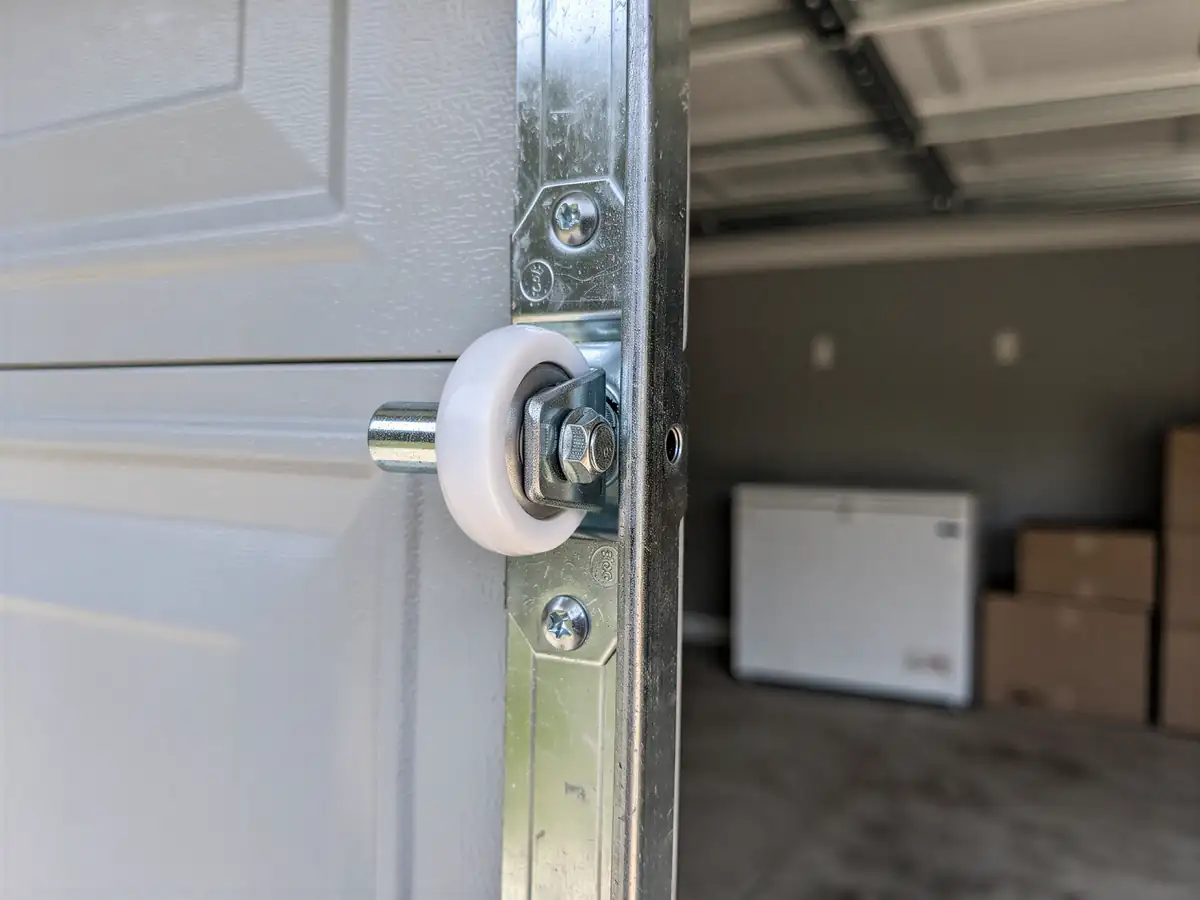
Most of the garage doors we open up in this service area went in when the house was built, and that's commonly somewhere between 1960 and 1979 - the bulk of the housing stock here dates from 1947 up to 2012 with a median around 1963. That means a lot of original steel rollers on galvanized track, running on ball bearings that were never meant to last sixty years of daily cycles. Nylon rollers didn't become standard until later, so plenty of these doors are still on the builder-grade steel wheels that came with the house.
The South Bay sits in a mild temperate climate band, so you're not dealing with the freeze-thaw cracking that splits nylon rollers in colder states, or the kind of summer heat that cooks grease out of a bearing in a week. Here, it's closer to simple fatigue: thousands of open-close cycles, dry bearings, and steel wheels that have worn a groove into the track rail. You'll hear it before you see it - a grinding or rattling that gets louder as the roller wheel flattens on one side.
We're not going to tell you every noisy door needs new rollers. Sometimes it's a bent track or a loose hinge, and replacing rollers on a door that's actually out of alignment just buys you a few quiet months before the same noise comes back.
How Long It Takes
A straight roller swap - ten rollers, same door, no track work - is usually a single visit
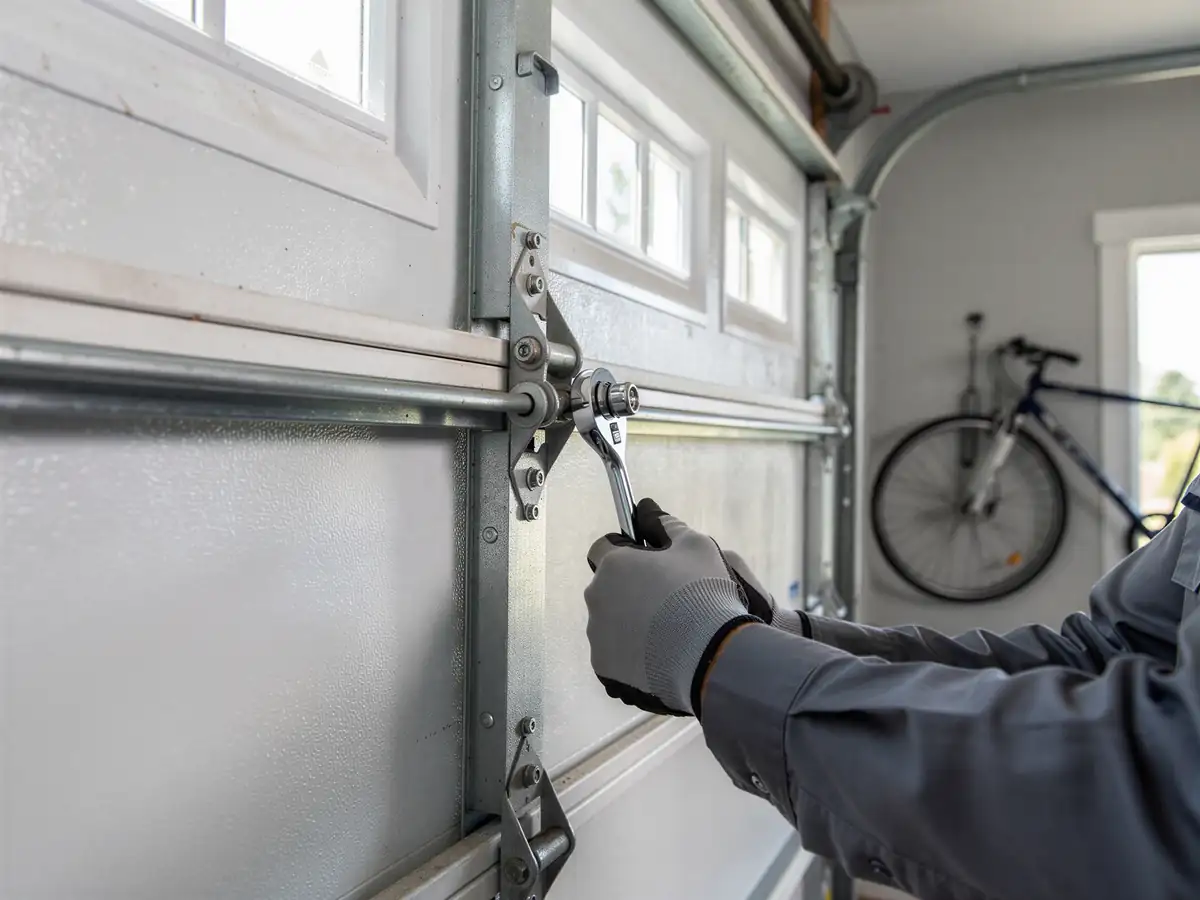
The time add is in diagnosis: pulling the door, checking each roller stem and wheel for wear, and looking at whether the track itself has been scored by years of a bad roller riding in it. If the track's grooved or bent where the rollers have been grinding, that gets addressed in the same visit rather than sending you off with new rollers running in a damaged rail.
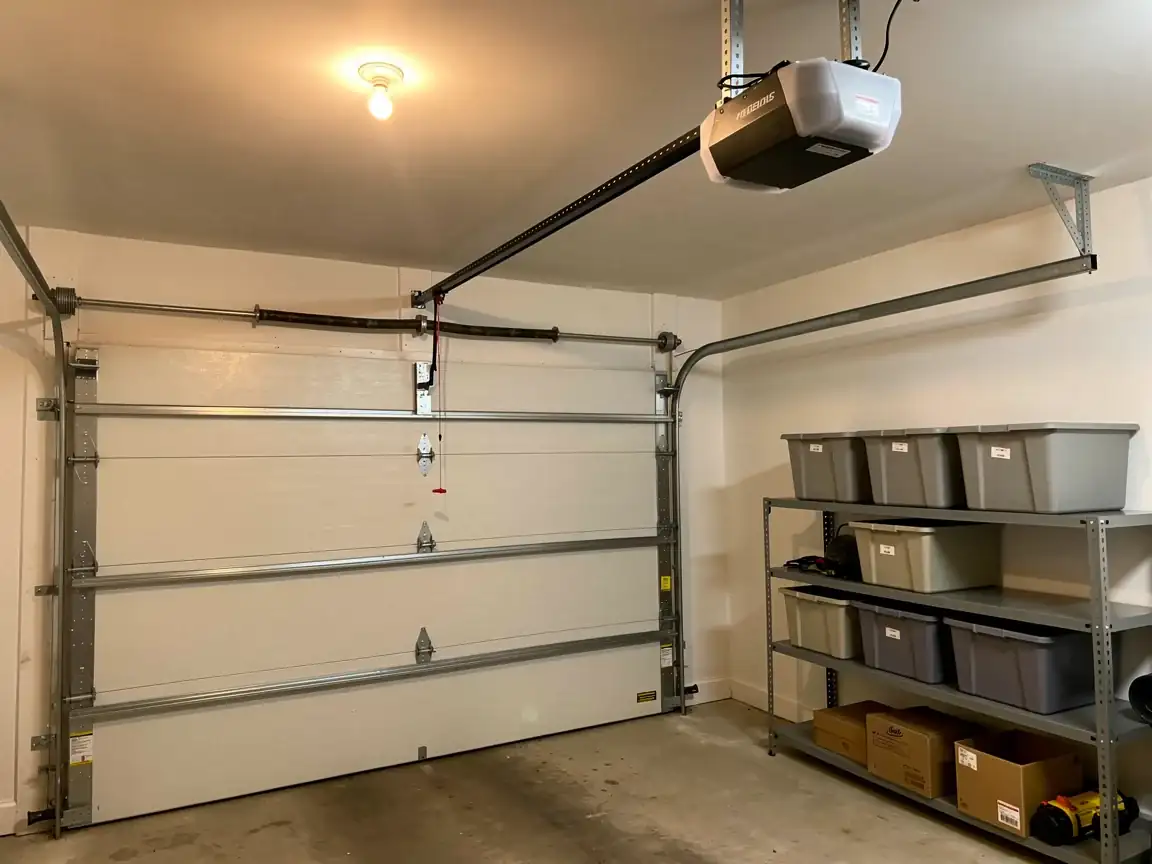
Doors with extension springs or older hardware sometimes take a bit longer because the panel has to come down further to clear the rollers out of the track
And on some two-car doors every roller on both sides gets checked even if only a few are visibly bad - once one wheel's flattened, the others on that door are usually close behind.
We won't pad the visit out
If the rollers are fine and the noise is coming from somewhere else - hinges, the opener's drive gear, a loose bracket - we say so and fix that instead. Replacing parts that aren't the problem doesn't make the door quieter, it just adds a line to your bill.
The Cost of This Job
What drives the cost on a roller job isn't the rollers themselves - it's what else the door needs by the time rollers have failed. A full set of nylon rollers with sealed bearings costs more upfront than steel but outlasts them by years and runs quieter, which matters if your garage sits under a bedroom. If the track's been grooved by a bad roller, that gets factored in too, since running new rollers in a damaged rail just wears them out again.
We don't list a flat number here because the spread between a basic steel roller swap and a full nylon upgrade with track correction is wide, and quoting one price for every door in the service area isn't honest. What we can tell you: most owners we talk to, once they're paying for the labor to pull the door apart, opt to replace the full set rather than the two or three that are audibly bad - the parts cost is small next to the labor, and a mismatched set of old and new rollers wears unevenly anyway.
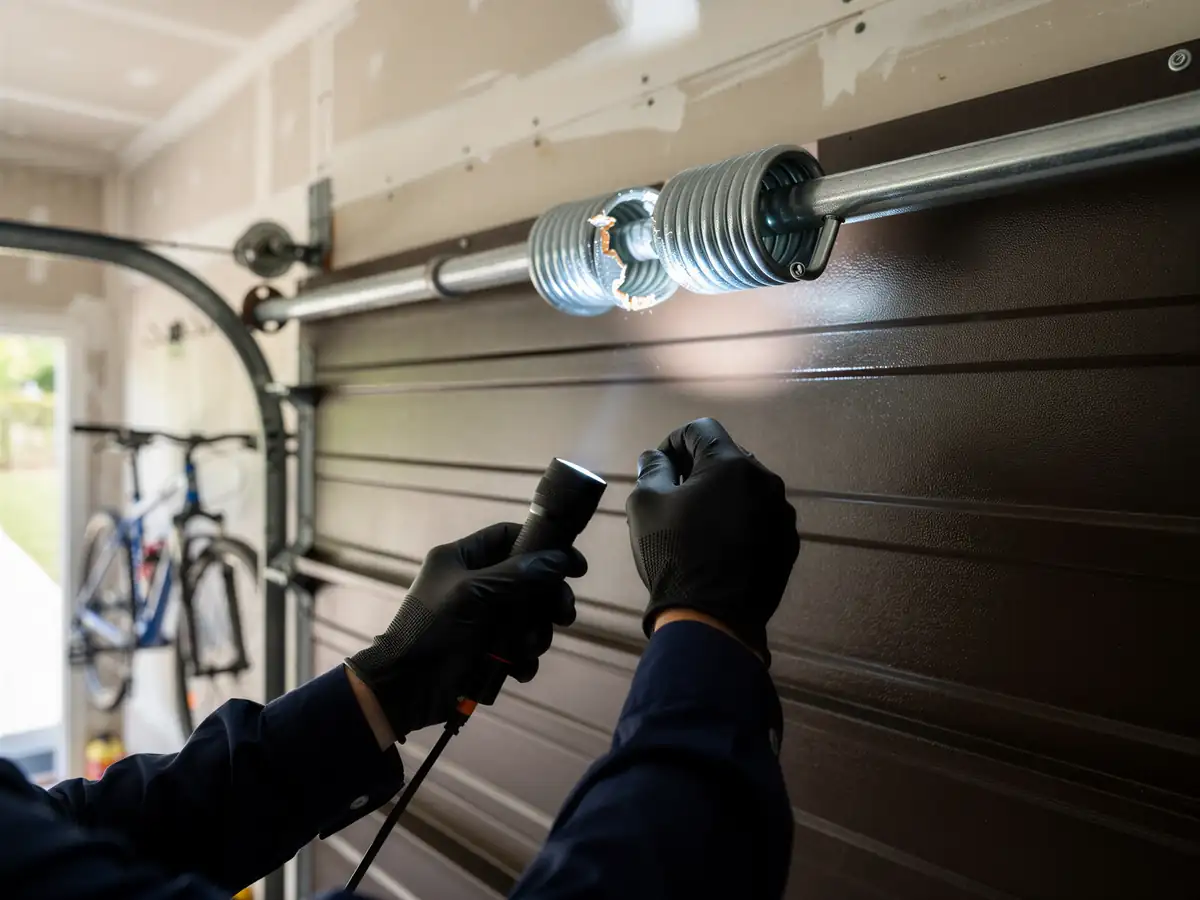
One honest limitation: if your door's springs or opener are also near the end of their life, doing rollers alone now and the rest later usually costs more in total labor than handling it together. We'll tell you if that's the case rather than quoting rollers in isolation.
How It Shows Up
The first sign is almost always sound - a grinding, clicking, or rattling as the door moves, usually worse at the top or bottom of the travel where the roller's flat spot catches the track hardest. On steel rollers, that flat spot is a worn bearing or a wheel that's been running dry long enough to develop a groove. You'll also notice the door jerking instead of gliding, especially right as it starts moving, because a flattened roller doesn't roll smoothly into the curve at the top of the track.
Some owners notice it first as vibration - the door shaking the wall near the track, or a visible wobble in the panel as it travels. That's usually a sign more than one roller has gone, since a single bad roller on an otherwise sound set tends to show up as noise before it shows up as movement.
If the door's come off the track entirely, that's past a simple roller swap - at that point you're also checking for bent track or a damaged panel edge, and we'll tell you honestly if the fix is bigger than rollers before we start pulling anything apart.