What Changes With the Season
Redondo Beach sits in a mild temperate band, so you're not dealing with the freeze-thaw cracking that splits seals in colder climates. What you get instead is a slower, steadier kind of wear. The marine layer rolls in most mornings and burns off by afternoon, and that daily swing in humidity does the same job to a rubber bulb seal that a hard freeze does elsewhere: it just takes longer to show.
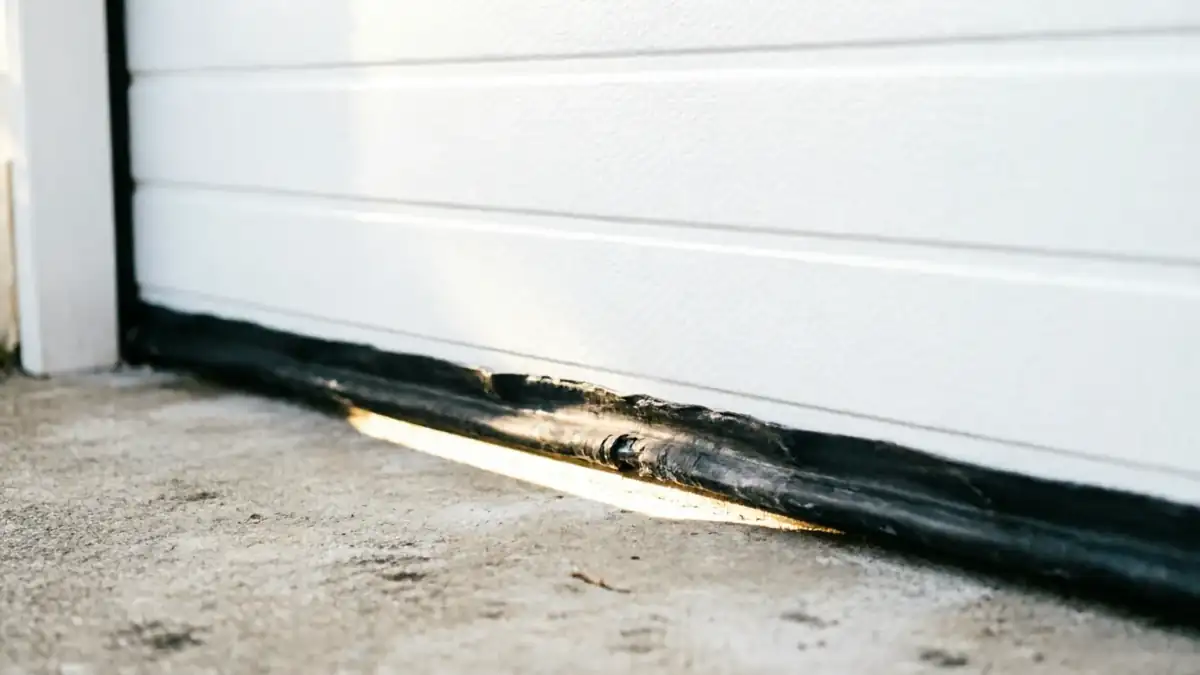
What homeowners notice first is a door that seals fine in the evening and whistles at the bottom corners by morning, once the night air has worked its way under a seal that's gone stiff. The vinyl doesn't crack from cold, it hardens from years of damp-dry cycling and loses its memory - it stops springing back to meet the slab once the door closes. You'll see this more on doors facing west, where the moisture sits longest before the sun hits it.
This isn't a problem that gets dramatically worse in any one month the way it might in a place with real winters. It's a problem that compounds year over year, which is exactly why a lot of owners here don't notice until the seal is already brittle.
What Local Conditions Do
A mild, humid coastal climate is gentle on a garage door in some ways and hard on it in others
You don't get ice splitting a seal retainer or snow load bending a track, but the constant low-grade moisture works into the aluminum retainer channel and the steel bottom fixture over time, and that's where a seal actually fails - not in the rubber itself, but in the channel that's supposed to hold it tight to the panel.
Once that channel loosens or corrodes slightly, the seal can look fine and still let air through
Which is why a draught complaint often turns out to be a hardware problem wearing a weatherstripping costume. UV plays a role too - vinyl bulb seals on west- and south-facing doors take more sun over a year here than they would somewhere with a real overcast winter, and that sun exposure dries them out faster than the rubber compound was built for.
The honest version of this: you can't fully stop either process with maintenance alone
You can slow it down with the right seal material and by keeping the retainer channel clean and seated, but salt-laden, humid coastal air is going to keep doing its work on anything metal or rubber mounted outdoors, year after year.
What Is Going On
Housing in this service area went up mostly between 1947 and 2012, with the median build year sitting at 1963, and the bulk of the stock across the area's named neighborhoods dates to the 1960s and 70s. That matters here specifically because a door and its seal system installed on a house built in that window is almost never the original - but the jamb, the track mounting, and the retainer channel usually are.
What that means in practice: the seal itself has probably been replaced once or twice over sixty years, but it's being pressed into a channel and against a jamb that have shifted slightly with six decades of settling, which is common on tract-built slabs from that era. A new seal dropped into an old, slightly out-of-true channel will look right and still leak air at one corner.
Owners in similar older sections of town run into this more than owners with newer builds, simply because the base hardware is older. It's not a defect in the original construction - it's just what sixty years of minor settling does to a slab-mounted track system, and it's the reason a seal swap alone doesn't always fix a draught.
When to Get Help
If a seal is visibly cracked, flattened on one side, or pulling out of its retainer, that's a straightforward swap and worth doing before winter's damp mornings make it worse. If you're feeling a draught but the seal looks intact, the channel or the jamb alignment is the more likely cause, and that's worth a call rather than a second seal purchase.
Here's the limitation: if the slab has settled enough that the door no longer closes square against the floor, no seal - new or old - is going to stop the draught. That's a track and leveling issue, and sometimes a full door replacement if the panel itself has racked out of shape. We'll tell you straight if that's what we're looking at instead of selling you a seal that won't hold.
Given that median household income in this area runs close to $92,920, most owners we talk to would rather pay once for a proper fix than replace the same seal every couple of years. If your door is original to a 1960s build, it's worth having the whole channel checked, not just the rubber.