What Causes It Around Here
Most of the housing stock in this service area went up between 1947 and 2012, with the median build year sitting around 1963. That means a huge share of the doors we get called out on are original or second-generation setups - torsion springs rated for a lifetime that ran out two decades ago, galvanized cable that's stretched and frayed, center-mount openers wired into boxes nobody's opened since the Carter administration. Across the 41 named communities we cover, the pattern repeats: 1960s and 70s construction, single-car and two-car garages built to the standards of that era, not this one.
The climate here doesn't help in the way people expect, but it also doesn't hurt the way it does inland. This is a mild temperate band - no deep freeze cracking seals, no 110-degree days baking lubricant out of a track. What gets these doors instead is just time and salt air doing slow work on hardware that was never stainless to begin with. Springs fatigue on a cycle count, not a season, and a 60-year-old garage has run that cycle count a long time ago.
We also see a fair number of opener failures that have nothing to do with age - a worn drive gear, a logic board that finally gives out, a sensor knocked out of alignment by someone backing a bike out in the dark. Those calls come in at all hours, which is the point of this page.
How Long It Takes
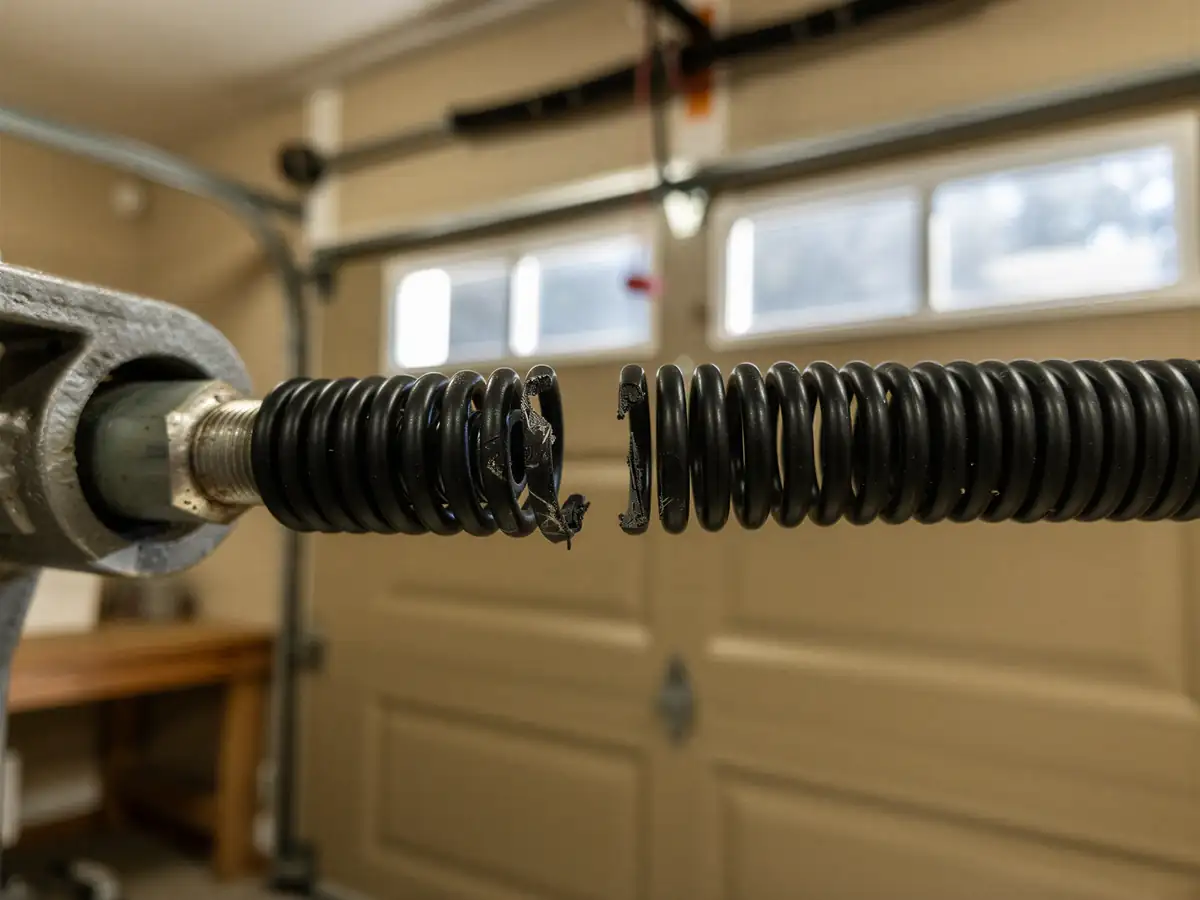
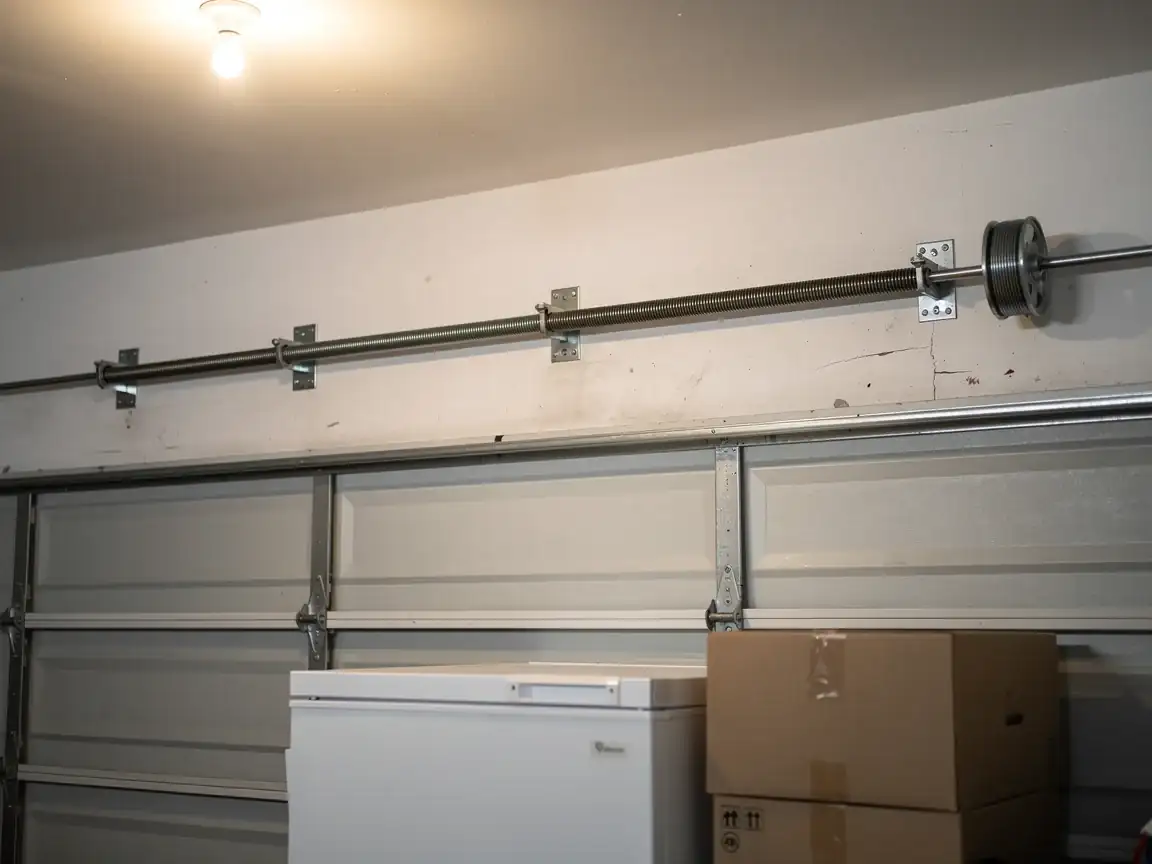
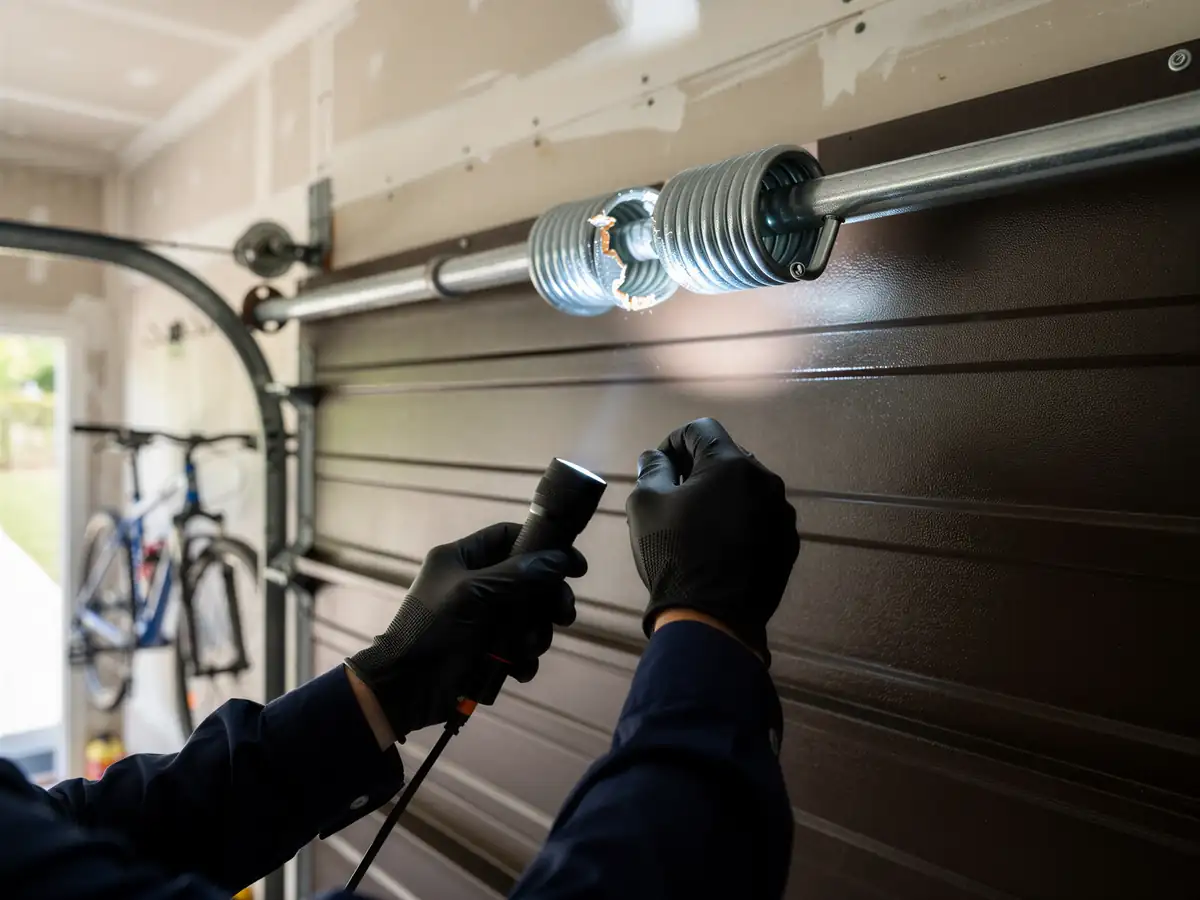
A broken torsion spring on a standard double door is usually the fastest fix we do
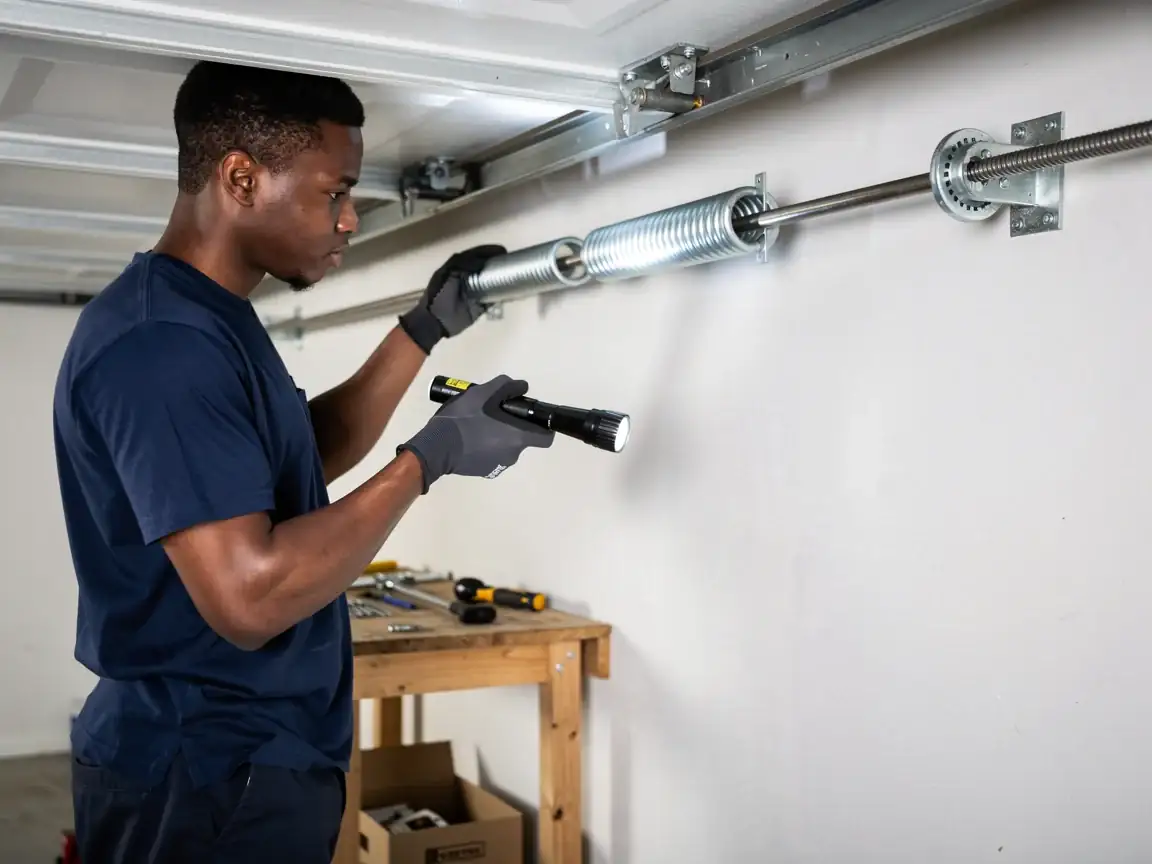
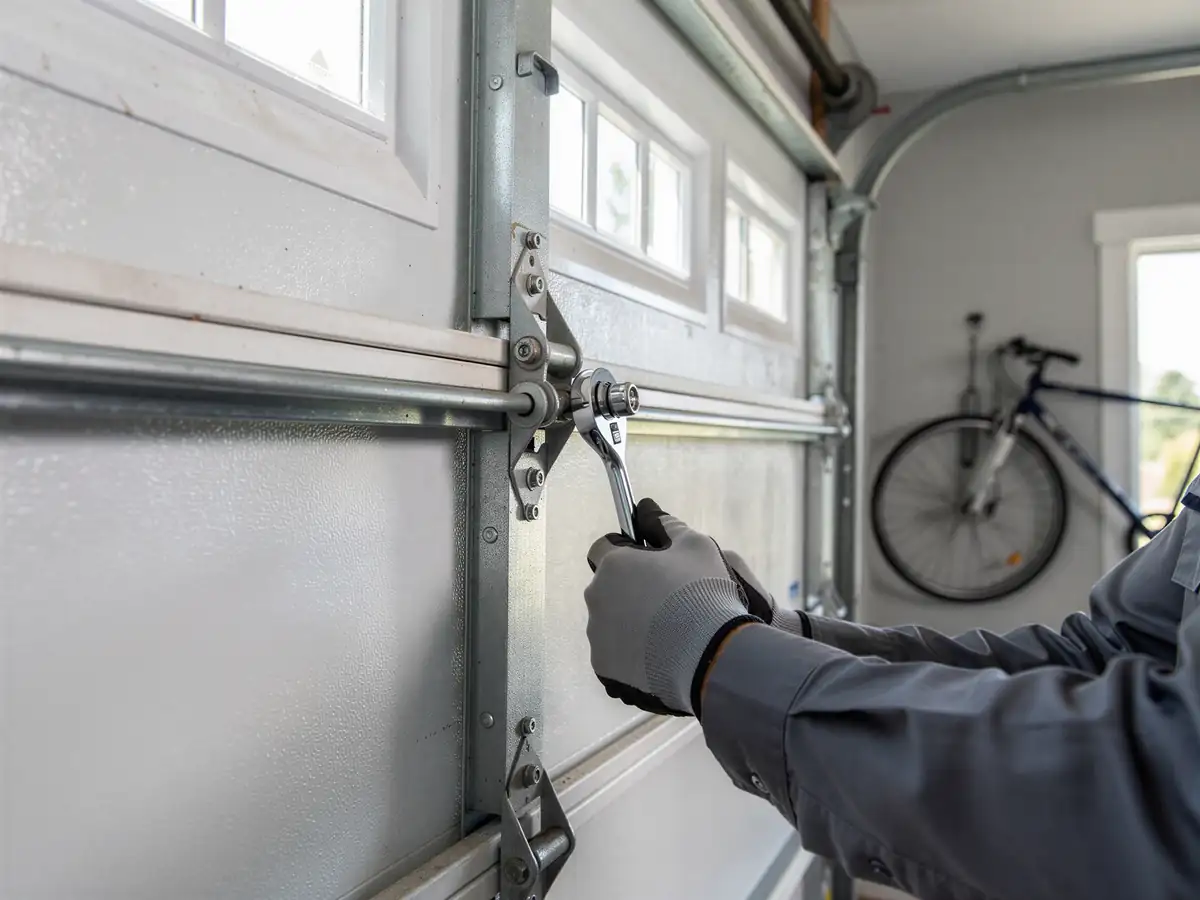
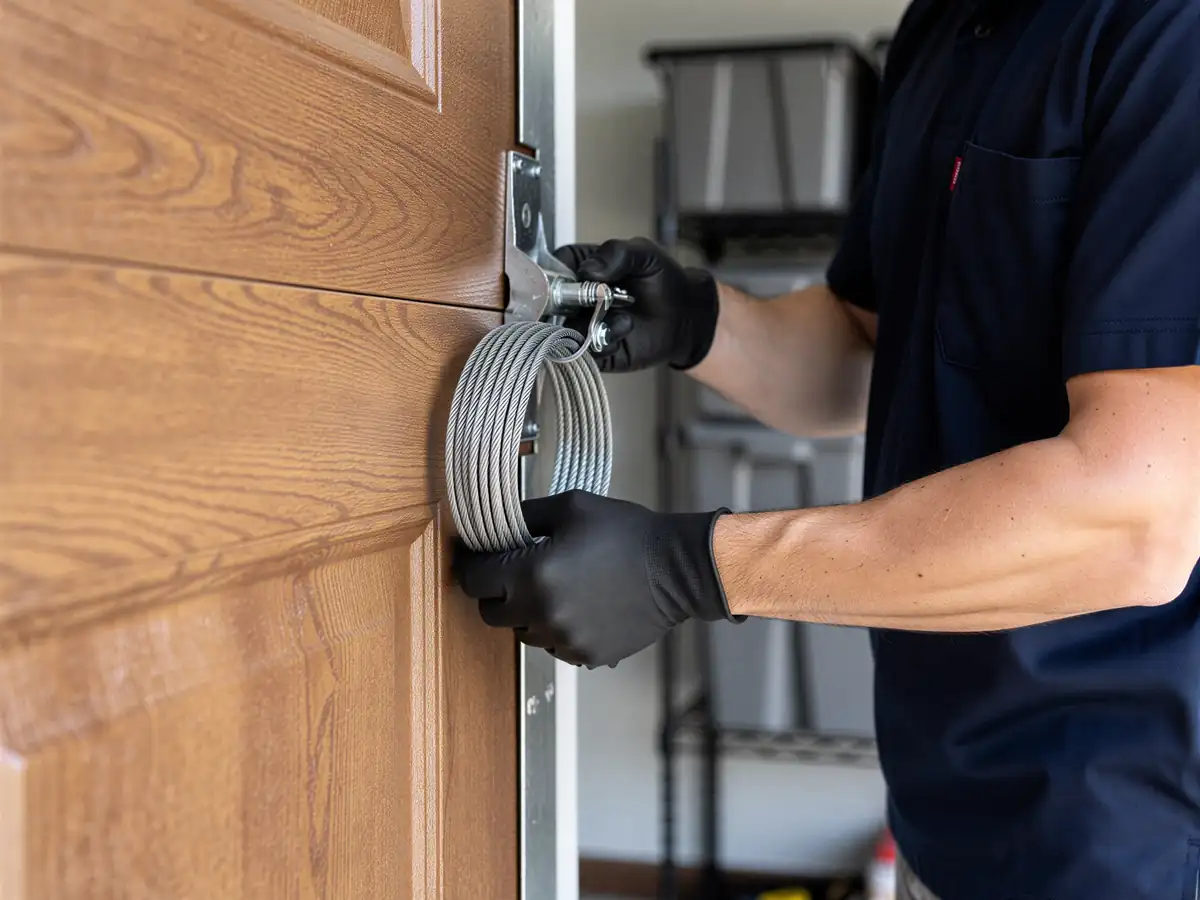
Once we're on site with the right spring size, it's a same-visit job. Cable off the drum takes longer to diagnose than to fix, because we have to check the drum and track for damage before we rewind anything. Opener failures vary the most: a dead capacitor or a reset is quick, but a board that's actually fried means ordering a part, and we won't pretend a part on back order moves faster because the call came in as an emergency.
That's the honest limitation here
If your opener model is old enough that the manufacturer's stopped stocking boards for it, we may have the door running manually same-day and the opener fixed once the part lands. We'd rather tell you that up front than have you waiting by the window.
For a stuck door blocking a car in the driveway at 6am
The goal is always to get the door moving safely first, diagnose second. Spring and cable jobs on original 1960s-era hardware sometimes take an extra few minutes just because sizes and mounting patterns from that period don't always match what's on the truck as a default stock size - which is exactly why we ask for the door's age and panel count before we roll.
The Cost of This Job
We're not going to list a number here that doesn't hold up once we've actually looked at your door - too many variables change it: torsion versus extension spring, single door versus double, whether the drum or track got damaged when the cable let go, whether the opener itself needs replacing or just a sensor realignment. What we can tell you is what drives the cost up or down.
Original hardware from the 1947-1963 era of construction common in this service area sometimes needs a spring size or drum that isn't a modern stock part, which can mean a slightly longer job even if the failure itself is simple. A household income median of $92,920 across the area means most jobs here are repair-first, not automatic replacement - we fix what's fixable and tell you plainly when a 50-year-old door and opener have reached the point where parts cost more than it's worth.
The honest version: get us the door's age, whether it's one piece or sectional panels, and whether the opener is chain, belt, or screw drive, and we can give you a real range before a truck leaves. Guessing over the phone without that just sets a number we'd have to walk back.
How It Shows Up
The call usually starts one of three ways. The door won't budge and there's a loud bang still echoing from the garage - that's a torsion spring letting go, and on the older builds common through this area it often takes the opener's travel limits out of alignment with it. The door drops crooked, hanging lower on one side - that's a cable off the drum, and it needs a hand on the door before anyone tries the opener again, because forcing it can bend the track.
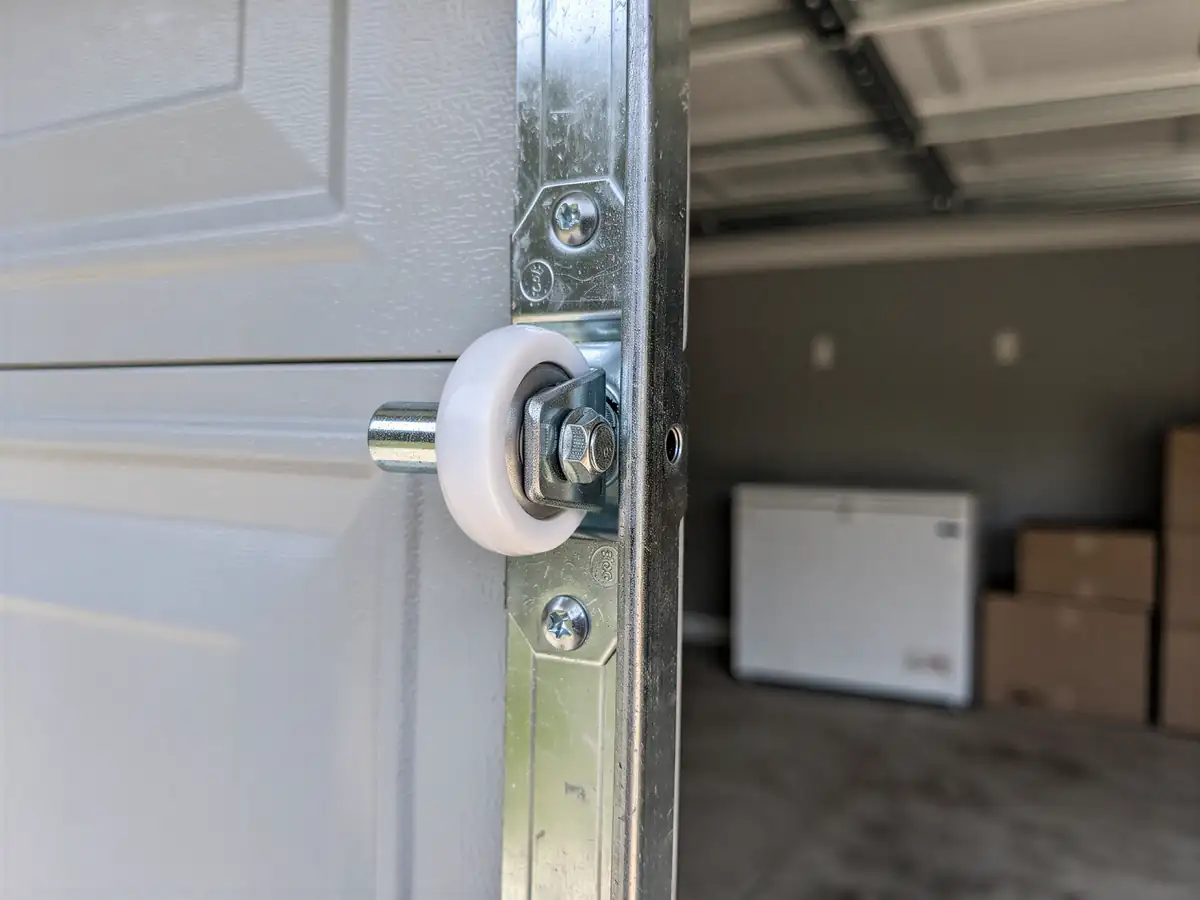
The third is quieter: the opener hums but the door doesn't move, or moves an inch and reverses. That's usually a worn gear, a failing capacitor, or sensors knocked out of line - common on the 1960s and 70s garages that make up most of the service area's housing, where decades of minor bumps and settling have nudged brackets just enough to matter.
If you're not sure which one you've got, the safest move is to stop using the opener, leave the door where it is, and call. A door that's jammed halfway is a door that can come down the rest of the way under its own weight, and that's a heavier object than most people expect.